+1-800-385-1627
support@recordedwebinars.com
Agile for Medical Devices: More than Just Software
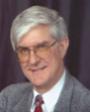
Brian Shoemaker
Access Recorded Version
Unlimited Viewing Recorded Version for 6 months ( Access information will be emailed 24 hours after the completion of live webinar)
Support
Call : +1-800-385-1627
Mailto : support@recordedwebinars.com
Overview:
Trying to understand the "Agile method" as just another software development lifecycle, with specific rules and a fixed outline, is mistaken, and seriously limits the benefits that Agile can bring. Successful Agile implementations include development, operations and business functions right from the outset. Anything less just creates another process island and cross function friction. All functions must participate actively throughout development, since development is recognized to require learning and adapting (and market needs can change rapidly).
Hardware development is as much a learning environment as software, the timeframes of hardware iterations may be different, but iteration and adaptation are still valid. Coordination with rapid software iterations requires discipline, but is definitely possible. Quality procedures (SOPs) need not impede the iterative, learning process of Agile. Deliverables, rather than the specific sequence of operations, can be the focus, with regular opportunity for reflection and process improvement.
Hazard analysis and risk management benefit from collaboration and iteration. Multiple points of view, with opportunity to learn from experience, catch much more of the safety issues in a design than an analyze-once approach. We suggest a five-step fluency model as a framework through which companies can understand their progress in becoming Agile across all functions - not just software. Attend this session in order to:
- Understand the principles of Agile design and implementation - and reap the associated productivity rewards
- Learn how an Agile approach can drive a smooth and continuous development progress - and can aid in successful product deliveries
- Develop a benefits pros & cons analysis - to then apply to your overall program initiatives
- Gain in-depth examination of key take-aways that enhance project deliveries
Why you should Attend:
Truly Agile organizations bring high-quality products to market quickly and efficiently, and are constantly looking at how to improve their methods. Unfortunately, when Agile is mentioned in existing companies, many people yawn, mutter "Yeah, that's for the software folks," and stop listening. You want the benefits that Agile can bring, but first you need to show your team that the approach is multidisciplinary. This webinar builds on three concrete examples to show how the Agile mindset applies across all disciplines.
Areas Covered in the Session:
- Agile is a Mindset-adopting it is like Learning a Language
- Consider Agile for Hardware
- Agile Aligns with Quality Improvement
- Risk Management is Iterative and learning by Nature
- Key thought-build Bridges between those Silos
Who Will Benefit:
- Regulatory Specialists
- Functional Managers - Software, Test, Hardware
- Other Development Specialists (Mechanical, Engineering, Other)
- Project Managers (Especially for Cross-Functional Teams)
- Software Developers
- Business Analysts
- Requirements Analysts
- Product Managers
- Portfolio Managers
Speaker Profile
Brian Shoemaker consults for healthcare products companies on computer system validation, software quality assurance, and electronic records and signatures. He has conducted validation both on product software and on internal software, developed software quality systems, audited software quality processes (including agile methodology), and evaluated 21 CFR Part 11 compliance. He has had clients in clinical diagnostics, medical device engineering, medical imaging, medical-device fabrics manufacturing, contract lyophilization, clinical trial software, dental prosthetics, and bone-repair implants. He has worked with companies in Germany and Switzerland as well as the U.S.
Previous to founding ShoeBar Associates, Brian had quality roles at PPD Informatics, Doxis, Inc., and Behring Diagnostics, Inc. Brian earned his Ph.D. in chemistry from the University of Illinois; he has achieved the ASQ Software Quality Engineer certification.